
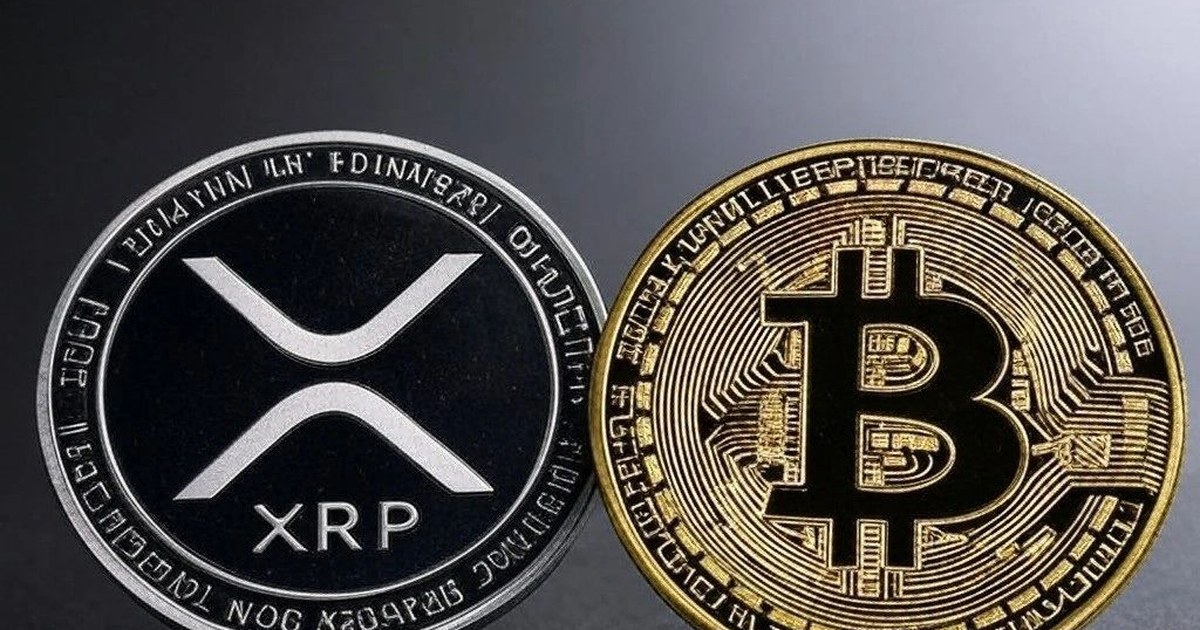
Censorship Resistance Bitcoin is often celebrated for its high degree of censorship resistance, primarily due to its decentralized nature. Transactions on the Bitcoin network are validated by a global network of miners, making it extremely difficult for any single entity to block or censor transactions or addresses. This feature aligns with Bitcoin's intended function as a peer-to-peer electronic cash system that operates outside traditional financial controls. In contrast, XRP (the cryptocurrency on the XRP Ledger) operates with a different model. The XRP Ledger uses a consensus algorithm where a set of validators, rather than miners, decide which transactions to include in the ledger. This setup introduces a level of centralization due to the Unique Node List (UNL), which is a list of trusted validator nodes that the network relies on for consensus. While theoretically, anyone can run a validator, in practice, Ripple Labs has significant influence over which validators are trusted, potentially allowing for wallet or transaction blocking if a majority of the UNL agrees. However, this has not been a widespread issue, but the potential remains due to the structure of the consensus mechanism.
Security and Hash Rate Bitcoin's security is underpinned by its Proof-of-Work (PoW) consensus mechanism, where miners compete to solve complex mathematical problems to validate transactions and add them to the blockchain. This process requires substantial computational power, measured in hash rate, which currently stands at terahashes per second, providing robust security against double-spending or other fraudulent activities. The high hash rate also means that an attack on the network would require an enormous amount of energy and computing power, making it economically unfeasible. Making bitcoin the most secure blockchain
XRP, however, uses the Ripple Protocol Consensus Algorithm (RPCA), which does not rely on mining or hash power. Instead, transactions are validated by a consensus among trusted validators, which is both energy-efficient and allows for faster transaction processing but sacrifices security of the network. While this method is less energy-intensive, it's sometimes criticized for its relative centralization, which could potentially make it more vulnerable to coordinated attacks if the UNL were compromised. However, the XRP Ledger has maintained security through its consensus model, with no significant security breaches reported to date. In tha era of cancel culture this is a more concern.
Consensus Algorithm Bitcoin's PoW is known for its security but criticized for its environmental impact due to the vast energy consumption involved in mining. PoW ensures that once a block is added to the blockchain, it's nearly immutable, providing a high level of security but at the cost of scalability and energy use on the base layer. However, there are many Layers 2 BTC solutions for scalability and efficient namely The Lightning Network
XRP's consensus algorithm, RPCA, is fundamentally different Which have a host of known vulnerabilities. It's designed for speed and efficiency, where validators agree on the ledger state in rounds. If 80% of validators agree, the ledger is updated. This consensus mechanism allows for quicker transaction validation without the need for mining, making XRP transactions much faster and less energy-intensive than Bitcoin's.
Transaction Per Second (TPS) and Layer 2 Solutions Base layer Bitcoin focus on security of the network and handle around 7 transactions per second (TPS). However, with the implementation of Layer 2 scaling solutions like the Lightning Network, Bitcoin's throughput can increase significantly, allowing for faster, Millions of Transactions per second, cheaper microtransactions off the main blockchain. This is crucial for adoption in everyday payments or microtransactions where speed and low fees are essential.
XRP, by design, offers a higher throughput directly on its Layer 1, with the capacity to process up to 1,500 TPS. Although there are ongoing developments for further scaling. XRP's speed and efficiency are central to its value proposition, particularly for cross-border payments. By comparison Visa is at 1700 TPS and Mastercard is at 5000 TPS
Global Adoption Bitcoin enjoys widespread global adoption as a store of value and investment asset, with a significant presence in both retail and institutional markets. Its recognition and the infrastructure around it, including exchanges, wallets, and payment processors, have made it a staple in the cryptocurrency landscape. Bitcoin's adoption is bolstered by its first-mover advantage and the narrative of "digital gold." as mentions by chairman of the Federal Reserve Jerome Powell. Currently The Republican led congress, and the Trump administration are preparing legislation that could see the US create a Bitcoin Reserve of 1 million Bitcoin which will like influence other countries to do the same. There are a number of nations states that currently own thousands of bitcoins or are actively mining it. such as El Salvador, Bhutan, China, UK, Germany, and Russia
XRP's adoption has been more nuanced, primarily focused on the financial sector for cross-border payments. Ripple, the company behind XRP, has partnerships with numerous financial institutions, aiming to streamline international money transfers. However, XRP's journey has been fraught with regulatory challenges, notably with the SEC in the U.S., which has impacted its adoption in certain markets. Despite this, XRP continues to see usage and interest, especially where efficient, low-cost cross-border solutions are needed. Ripple labs recently was approved to a stable coin RLUSD and most of its legal issues seem to be behind it.
Conclusion Bitcoin and XRP serve different purposes within the cryptocurrency ecosystem. Bitcoin's strength lies in its decentralized, censorship-resistant nature, making it a favorite for those seeking an alternative to traditional finance.