
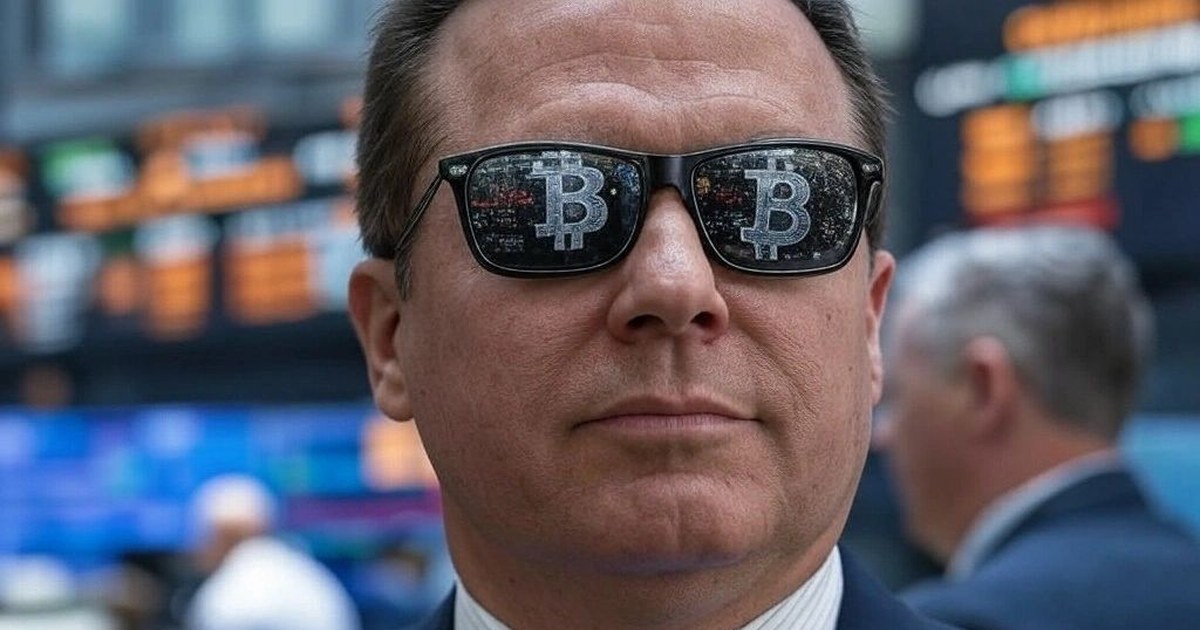
In a striking display of institutional confidence, BlackRock’s iShares Bitcoin Trust (IBIT) recorded a staggering $500 million in net inflows on March 11, 2025, marking one of its largest single-day hauls since its launch in January 2024. This surge comes as Bitcoin’s price slumped below $78,000—a four-month low—highlighting a stark divergence between Wall Street’s bullish bets and retail investors’ mounting unease. As the crypto market grapples with macroeconomic headwinds and regulatory uncertainty, BlackRock’s move signals a deepening commitment to digital assets, raising questions about Bitcoin’s trajectory and the broader financial landscape.
A Record-Breaking Day for IBIT The $500 million influx into IBIT, reported by Bloomberg, underscores BlackRock’s dominance among U.S. spot Bitcoin ETFs. Since its debut, IBIT has amassed over $50 billion in assets, outpacing rivals like Fidelity’s FBTC and Bitwise’s BITB. On March 11, while other Bitcoin ETFs saw tepid inflows or outflows—Fidelity clocked $36 million, per Farside Investors—IBIT’s haul dwarfed the competition, reinforcing its status as the go-to vehicle for institutional crypto exposure. This wasn’t a fluke. IBIT’s inflows align with a pattern of robust institutional interest, even as Bitcoin’s price dipped 5% from its mid-February peak of $82,000. Analysts attribute the surge to portfolio rebalancing by hedge funds and asset managers, spurred by Bitcoin’s perceived value as a hedge against looming U.S. tariff hikes and fiat volatility. BlackRock’s integrated technology, leveraging Coinbase Prime’s custody, has also bolstered investor trust, offering a seamless bridge between traditional finance and crypto.
Market Context: Panic Selling vs. Institutional Grit The timing of BlackRock’s windfall is telling. Bitcoin’s slide below $78,000, reported by Yahoo Finance and CNBC on March 10, triggered a wave of retail sell-offs, with Glassnode data showing small wallets (under 1 BTC) shedding holdings at the fastest pace since November 2024. Posts on X echoed the panic, with users like @crypto_bitlord7 lamenting “another fakeout” and urging followers to “cut losses.” Yet, Wall Street’s response couldn’t be more different. BlackRock’s inflows suggest institutions see the dip as a buying opportunity, not a collapse. This disconnect stems from differing horizons: retail traders react to short-term price swings, while firms like BlackRock play a longer game, betting on Bitcoin’s scarcity (capped at 21 million coins) and growing adoption. The U.S. strategic Bitcoin reserve, launched via Trump’s executive order on March 7, 2025, using forfeited assets (Moneycontrol), further emboldens this view, despite its failure to spark immediate government buying.
Trump’s Crypto Gambit and ETF Momentum President Donald Trump’s pro-crypto stance has been a tailwind for ETFs like IBIT. His reserve policy, while criticized as “capricious” for favoring Bitcoin over other assets (Yahoo Finance), has lent legitimacy to the asset class. BlackRock’s inflows coincide with this shift, as institutional players—once skeptical—pivot to avoid missing out. The firm’s 2024 haul of $37.2 billion in net inflows, third among all U.S. ETFs per Bloomberg, underscores this trend, trailing only Vanguard’s S&P 500 fund ($116 billion) and iShares’ Core S&P 500 ETF ($89 billion). But the reserve’s tepid execution—no fresh BTC purchases, just reallocated seizures—has left some investors cold, contributing to Bitcoin’s dip. X sentiment reflects this frustration, with @BTC_Archive noting, “Trump’s reserve is a paper tiger—where’s the real juice?” BlackRock, undeterred, seems to be capitalizing on the narrative, positioning IBIT as a proxy for both policy optimism and market resilience.
Risks and Rewards: Centralization Concerns BlackRock’s aggressive push isn’t without controversy. With IBIT now holding over 700,000 BTC (roughly 3.3% of the total supply), critics warn of creeping centralization. Bitcoin’s ethos—decentralized, peer-to-peer money—clashes with a Wall Street titan amassing such influence. Posts on X, like @hodlonaut ’s quip, “BlackRock’s eating BTC like Pac-Man,” highlight this tension. If ETF hoarding continues, could it distort Bitcoin’s market dynamics or alienate its libertarian base? On the flip side, the rewards are tangible. IBIT’s liquidity—$4.1 billion in daily volume on its peak day in November 2024 (CoinDesk)—lowers transaction costs and stabilizes prices, benefits that retail investors indirectly enjoy. For institutions, it’s a hedge against a faltering dollar, especially as Trump’s tariff threats loom (Bloomberg). The $500 million inflow suggests BlackRock anticipates a rebound, with some analysts eyeing $100,000 by year-end if macroeconomic fears ease.
What’s Next for Bitcoin and ETFs? The IBIT surge raises the stakes for Bitcoin’s 2025 outlook. Short-term, volatility is likely—tariff talks and Federal Reserve rate decisions could sway sentiment. But BlackRock’s bet hints at a longer-term shift: crypto as a staple in institutional portfolios. If inflows persist—say, $10 billion more by December—IBIT could rival top equity ETFs, a feat Adam Back mused on X: “Bitcoin ETFs might take the crown in 2025.” For retail investors, the message is mixed. BlackRock’s confidence could signal a floor under Bitcoin’s price, yet the centralization risk and market jitters warrant caution. The establishment narrative—Wall Street as crypto’s savior—deserves scrutiny. Is this a genuine embrace of Bitcoin’s potential, or a power grab cloaked as progress? As BlackRock doubles down, the crypto world watches, divided between opportunity and unease.