
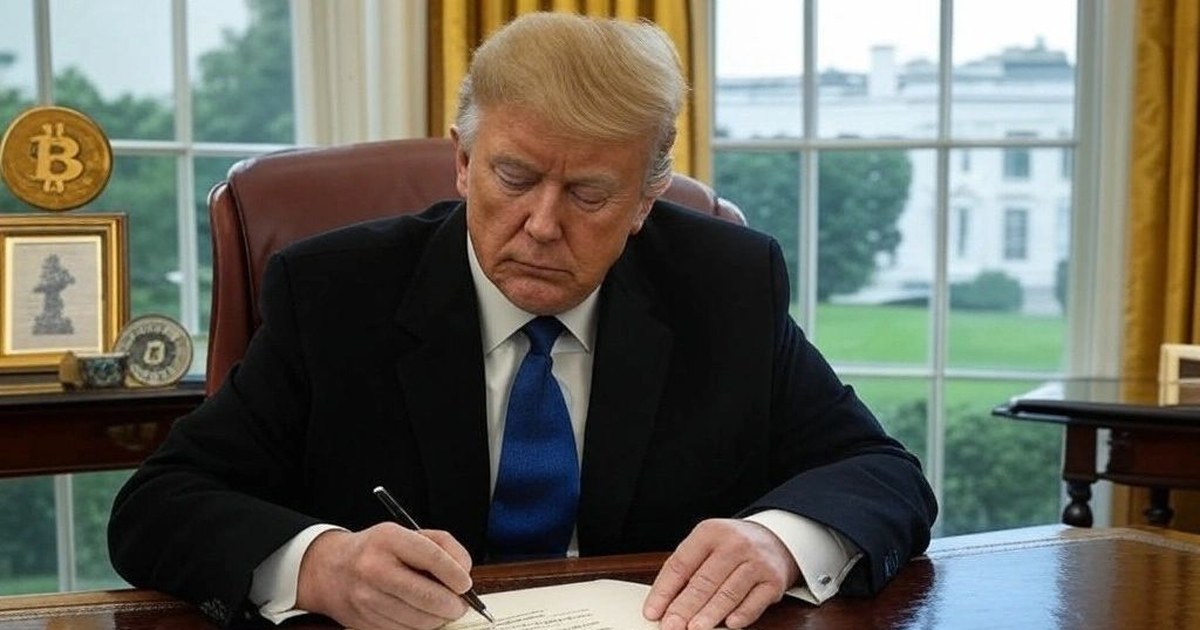
On March 6, 2025, U.S. President Donald Trump signed a landmark executive order establishing a Strategic Bitcoin Reserve, marking a historic shift in the United States’ approach to digital assets. This move, announced just a day before a highly anticipated White House Crypto Summit, positions the U.S. as a potential global leader in cryptocurrency adoption and innovation. The order, detailed by Trump’s AI and Crypto Czar David Sacks, utilizes Bitcoin seized through federal criminal and civil forfeiture proceedings, effectively integrating the world’s leading cryptocurrency into the nation’s financial strategy without additional taxpayer burden. Here’s a breakdown of the order and its far-reaching implications for global adoption. Details of the Executive Order The executive order, titled “Strengthening American Leadership in Digital Financial Technology,” builds on Trump’s earlier January 23, 2025, directive that tasked a Presidential Working Group with exploring a national digital asset stockpile. The March 6 order takes this vision a step further by formally establishing the Strategic Bitcoin Reserve. Key details include:
- Funding Source: The reserve will be capitalized exclusively with approximately 200,000 Bitcoin (BTC) already held by the U.S. government, acquired through law enforcement actions such as criminal seizures. Valued at roughly $18.5 billion at current market prices, this stash ensures no additional government purchases or taxpayer funds are required.
- Permanent Store of Value: Unlike previous practices where the U.S. Marshals Service auctioned off seized cryptocurrencies, the order mandates that the Bitcoin in the reserve will not be sold. This positions it as a long-term strategic asset, akin to the Strategic Petroleum Reserve, intended to bolster national financial resilience.
- Comprehensive Audit: The order requires a full accounting of all federal digital asset holdings, providing transparency into the government’s cryptocurrency portfolio for the first time.
- Scope Limitation: While Trump had previously named five cryptocurrencies—Bitcoin (BTC), Ethereum (ETH), XRP, Solana (SOL), and Cardano (ADA)—for inclusion in a broader strategic reserve on March 2, 2025, the March 6 order specifies only Bitcoin for the initial reserve. David Sacks clarified via social media that the government will not acquire additional assets beyond forfeiture proceeds, suggesting a more focused approach for now.
- Timing and Context: The signing coincides with preparations for the White House Crypto Summit on March 7, where Trump is expected to meet with industry leaders to further outline his administration’s crypto-friendly policies. This timing underscores the order’s role as a cornerstone of his vision to make the U.S. “the crypto capital of the world.”
The order reflects a significant departure from the Biden administration’s cautious stance on digital assets, which emphasized regulatory crackdowns over adoption. By revoking Biden’s Executive Order 14067 and rescinding related Treasury policies, Trump’s administration is signaling a pro-crypto pivot aimed at fostering innovation and economic growth. Implications for Global Adoption The establishment of the U.S. Strategic Bitcoin Reserve carries profound implications for the global cryptocurrency landscape, potentially accelerating adoption and reshaping economic policies worldwide. Here are the key ramifications:
- Legitimacy and Institutional Adoption By recognizing Bitcoin as a national asset, the U.S. lends unprecedented legitimacy to the cryptocurrency. This could spur institutional investors, corporations, and financial institutions to integrate Bitcoin into their portfolios more aggressively. Analysts suggest that Wall Street, already warming to digital assets (with firms like MicroStrategy rebranding as “Strategy” to focus on Bitcoin), may see this as a green light for deeper engagement. Bank of America CEO Brian Moynihan’s recent comments—that clear regulations could bring banks “hard into the transactional side” of crypto—hint at the potential for mainstream financial integration.
- Global Precedent and Competition The U.S. move could set a domino effect in motion, encouraging other nations to establish their own cryptocurrency reserves. Countries like El Salvador, which adopted Bitcoin as legal tender in 2021, may see their strategies validated, while others—potentially including economic rivals like China—might accelerate their own digital asset plans to counter U.S. dominance. Senator Cynthia Lummis, a vocal Bitcoin advocate, has argued that such a reserve could strengthen the U.S. dollar globally, but it may also challenge its status as the world’s primary reserve currency if decentralized assets gain traction.
- Market Impact and Volatility The immediate market response to Trump’s earlier March 2 announcement—where Bitcoin surged 11% to $94,164 and other named cryptocurrencies like Cardano soared nearly 60%—demonstrates the reserve’s potential to drive price action. However, the order’s focus on holding rather than trading Bitcoin may stabilize its value over time, reducing volatility as it matures into a recognized store of value. Critics, including crypto investor Anthony Pompliano, caution that including smaller altcoins (as initially proposed) could enrich insiders at the expense of broader market stability, though the Bitcoin-only focus mitigates this concern for now.
- Regulatory Clarity and Innovation The order’s emphasis on protecting blockchain developers, miners, and self-custody users signals a regulatory shift toward clarity and support rather than restriction. This could unleash a wave of innovation in the U.S., from blockchain-based payment systems to decentralized finance (DeFi) solutions, making cryptocurrencies more practical for everyday use. Globally, this may pressure other nations to streamline their own regulations to remain competitive in the digital economy.
- Economic and Geopolitical Leverage Proponents argue that a Bitcoin reserve could help the U.S. reduce its national debt without raising taxes, as suggested by Lummis’ plan to halve the debt in 20 years through Bitcoin appreciation. If successful, this could enhance U.S. economic leverage over adversaries like China and Russia, who might face a stronger dollar backed by both traditional and digital assets. However, skeptics like Cornell professor Eswar Prasad warn that government involvement could distort crypto markets, potentially undermining Bitcoin’s decentralized ethos.
Challenges and Controversies Despite its bold vision, the Strategic Bitcoin Reserve faces hurdles. Legal experts debate whether Congressional approval is needed to fully implement it, though some suggest the Treasury’s Exchange Stabilization Fund could bypass this requirement. Additionally, the reserve’s reliance on seized assets limits its scale unless the government opts to purchase more Bitcoin—a step Trump has not yet committed to. Critics also highlight the risk of centralization, arguing that significant government holdings could threaten Bitcoin’s censorship-resistant nature, a core tenet of its appeal.
Conclusion Donald Trump’s executive order on March 6, 2025, establishing a Strategic Bitcoin Reserve is a watershed moment for cryptocurrency in the United States and beyond. By leveraging existing federal holdings, the U.S. is positioning itself at the forefront of a digital financial revolution, potentially catalyzing global adoption and redefining economic power dynamics. While challenges remain—ranging from regulatory overreach to market stability—the move underscores a clear message: digital assets are no longer a fringe experiment but a strategic priority. As the White House Crypto Summit looms, the world watches to see how this reserve will evolve and whether it will truly make the U.S. the crypto capital Trump envisions.