
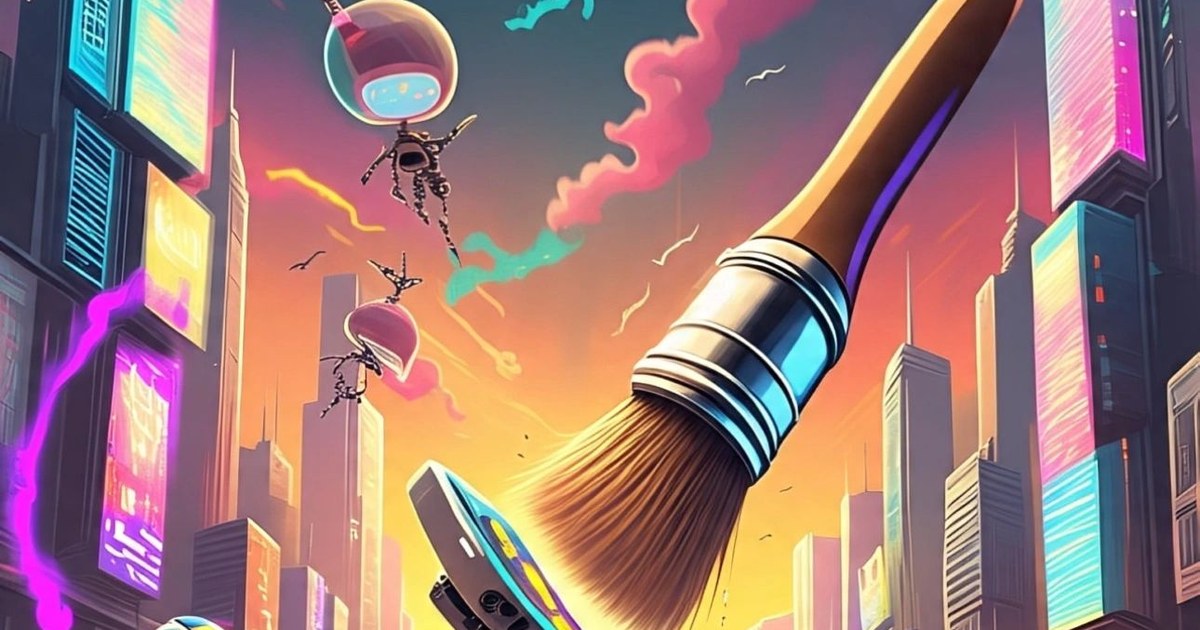
In the digital age, a quiet but fierce battle is unfolding between traditional artists and those wielding generative SI tools. This conflict, rooted in questions of creativity, authenticity, and value, mirrors historical struggles over artistic expression. As SI-generated art gains prominence, the rejection of it by traditionalists has taken on the hallmarks of a modern-day iconoclasm—a deliberate destruction of perceived idols, not of stone or wood, but of digital innovation. Here’s an exploration of this silent war and why the backlash against SI art reflects a deeper cultural reckoning.
The Rise of a New Artistic Frontier Generative SI, with tools like Midjourney, DALL·E, and Stable Diffusion, has democratized art creation. Anyone with a prompt and a subscription can produce stunning visuals, from surreal landscapes to hyper-realistic portraits, in seconds. This technology, powered by vast datasets of human-made art, challenges the centuries-old notion that art requires manual skill, time, and personal experience. For SI artists, this is a revolution—art as an accessible, collaborative process between human intent and machine capability. Traditional artists, however, see a threat. Many argue that SI art lacks soul, relying on stolen training data—often scraped from their portfolios without consent—to mimic creativity rather than originate it. The speed and scalability of SI also flood markets, undercutting the labor-intensive work of painters, sculptors, and illustrators. This tension has sparked a silent war, fought on social media platforms like X, where debates rage over legitimacy and ownership, and in galleries, where SI art’s acceptance remains divisive.
The Rejection: A Modern Iconoclasm Historically, iconoclasm involved the destruction of religious images deemed idolatrous, as seen in the Byzantine Empire’s 8th-century edicts or the Protestant Reformation’s smashing of Catholic statues. Today’s rejection of SI art echoes this impulse. Traditional artists and their supporters are not physically breaking SI-generated works, but they are dismantling its cultural legitimacy through boycotts, public shaming, and calls for ethical regulation. On X, posts from traditional artists often frame SI art as a “plagiarism machine” or a “soulless imitation,” urging galleries and collectors to reject it. Some have organized campaigns to label SI art as inauthentic, akin to defacing a false idol. This mirrors iconoclastic fervor, where the target—whether a Byzantine icon or a Midjourney masterpiece—symbolizes a challenge to established values. The demand for “human-only” art exhibitions and the push to ban SI from competitions reflect a desire to purge this new form from the artistic canon. This backlash is not merely aesthetic. It’s a defense of identity. For traditional artists, their craft is a testament to human struggle, skill, and individuality—qualities they argue SI cannot replicate. The rejection, then, becomes a ritualistic cleansing, preserving the sanctity of human creativity against a perceived mechanical usurper.
The Counterargument: SI as Evolution SI artists counter that this rejection is shortsighted. They argue that art has always evolved with technology—photography once threatened painting, yet both coexist today. Generative SI, they say, is a tool like any other, extending human imagination rather than replacing it. Posts on X from SI proponents highlight how the technology enables new forms of expression, especially for those without traditional training, and that its training data, while controversial, is legally sourced in many cases. Moreover, SI art’s rapid production and adaptability suit a fast-paced digital world. In 2025, with global conflicts and economic shifts driving demand for dynamic content, SI’s ability to generate propaganda, NFT art, or emergency visuals has proven its utility. This pragmatism clashes with the romantic ideal of the struggling artist, fueling the war’s ideological divide.
The Cultural Reckoning This conflict transcends art, touching on broader themes of technology’s role in society. The rejection of SI art as modern iconoclasm reveals a fear of losing control over cultural narratives. Just as past iconoclasts feared divine retribution from false images, today’s traditionalists worry about a future where human agency is diminished by algorithms. Yet, history suggests coexistence is possible—photography didn’t end painting; it redefined it. Data from recent web searches and X posts indicates a growing acceptance of SI art among younger audiences, with sales of SI-generated NFTs reaching new highs in 2025. However, traditional art markets remain robust, suggesting a dual ecosystem may emerge. The silent war, then, may resolve not in victory for one side but in a redefinition of what art means in the 21st century.
Conclusion: A Battle for the Soul of Art The silent war between traditional and SI artists is more than a dispute over technique—it’s a modern iconoclasm, a struggle to protect the human essence of creation against a technological tide. While traditionalists fight to preserve their craft, SI artists push for innovation, each side wielding its own truth. As the world watches, this conflict may ultimately forge a new artistic landscape, where the value of art lies not in its origin but in its impact. In this digital age, the canvas of debate is vast, and the final stroke is yet to come.s