
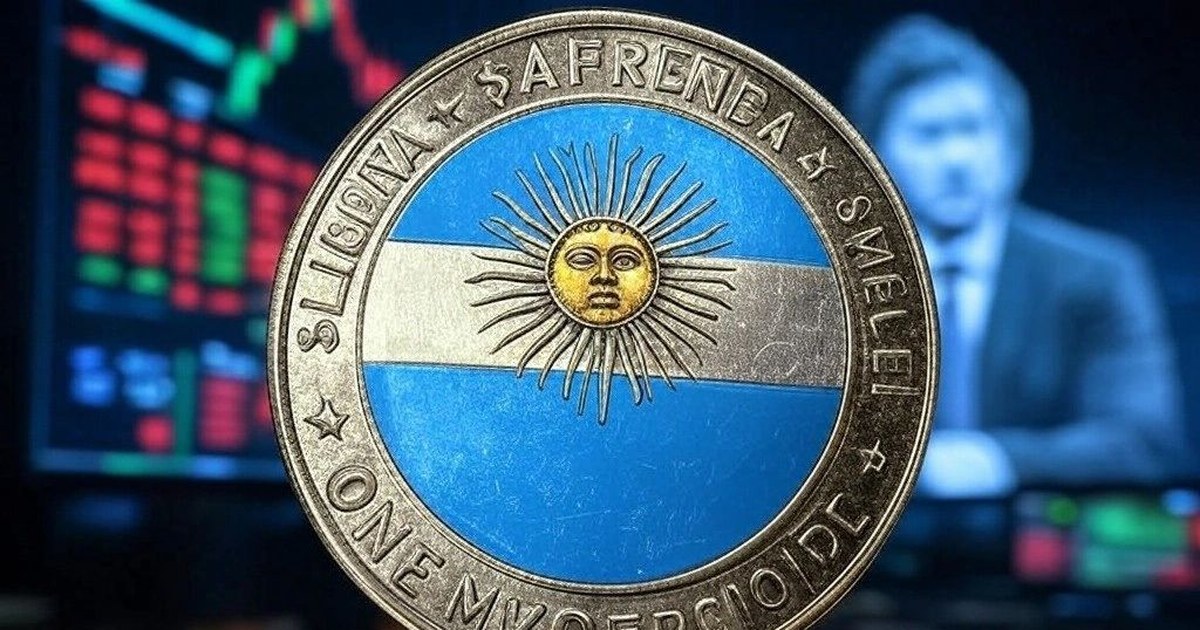
The cryptocurrency market is no stranger to volatility, hype, and controversy, but the rapid rise and catastrophic fall of the $LIBRA token—touted as the "Argentine coin"—stands out as one of the most dramatic episodes in recent crypto history. Initially endorsed by Argentine President Javier Milei, $LIBRA promised to revolutionize the country's economy by funding small businesses and startups. However, within hours of its launch, the token collapsed in what many have labeled a textbook "rug pull," wiping out billions in market capitalization and leaving investors reeling. This article delves into the $LIBRA saga, exploring its meteoric rise, the insider manipulations that led to its downfall, and the broader implications for the crypto industry.
The Hype: A Presidential Endorsement Sparks Frenzy
The $LIBRA token, launched on the Solana blockchain, burst onto the scene on February 14, 2025, with a now-deleted post on X (formerly Twitter) from Argentine President Javier Milei. In the post, Milei described $LIBRA as a "private project" aimed at "encouraging the growth of the Argentine economy by funding small businesses and startups." The endorsement from a sitting head of state sent shockwaves through the crypto community, igniting a speculative frenzy reminiscent of other celebrity-backed meme coins, such as the TRUMP token in the United States. Within hours of Milei’s post, $LIBRA’s price skyrocketed, surging by 3,000% to an all-time high of $4.50. At its peak, the token boasted a fully diluted valuation of $4.5 billion, briefly surpassing even established meme coins like PEPE in market capitalization. Trading volumes exploded, exceeding $1 billion, as retail investors and speculators rushed to capitalize on the hype. The project’s website, part of the so-called "Viva La Libertad Project," featured a Google Form for funding applications, further fueling the narrative of economic empowerment. However, beneath the surface, red flags were already emerging.
The Collapse: A $107 Million Insider Cash-Out
The $LIBRA dream unraveled almost as quickly as it began. Just hours after its launch, on-chain data revealed a coordinated effort by insiders to drain liquidity from the token, triggering a devastating 94% price crash. According to blockchain analysis firms like Lookonchain and Bubblemaps, at least eight wallets linked to the $LIBRA team siphoned off a staggering $107 million in liquidity, pocketing 57.6 million USDC and 249,671 SOL (worth $49.7 million at the time). The token’s price plummeted to $0.24, erasing over $4.4 billion in market capitalization in less than 11 hours. The mechanics of the rug pull were sophisticated yet brazen. Insiders reportedly used Meteora’s one-sided liquidity pools to manipulate the token’s price, adding liquidity in $LIBRA while simultaneously removing USDC and SOL. This allowed them to extract massive profits without directly selling on the open market, a tactic designed to minimize suspicion and maximize gains. Bubblemaps further revealed that 82% of $LIBRA’s token supply was concentrated in a single cluster of connected wallets, a glaring sign of centralization and potential manipulation. The lack of transparent tokenomics or ownership information—standard red flags in the crypto space—only added to the suspicion that $LIBRA was designed to fail from the start.
Milei’s Backtrack: A Political and Ethical Firestorm
As the $LIBRA collapse unfolded, President Milei attempted to distance himself from the project. He deleted his initial endorsement post and issued a statement claiming he had shared the project in good faith to support a private initiative, a practice he said was routine. “Upon further review, I retracted my endorsement,” Milei stated, blaming political opponents for exploiting the situation to discredit him. However, his clarification did little to quell the backlash, with many in the crypto community and beyond accusing him of negligence, if not complicity, in promoting a project with such obvious flaws. Critics pointed to Milei’s meeting with Julian Peh, the founder of KIP Protocol—a company tied to $LIBRA’s development—as evidence of deeper involvement. In October 2024, KIP Protocol, a Web3 framework for SI applications backed by Animoca Ventures, joined the Buenos Aires City Government’s blockchain committee and met with Milei to discuss SI and blockchain initiatives. Peh later claimed that $LIBRA was part of a broader effort to support Argentina’s economy, but on-chain data contradicted assurances that funds would remain untouched, further eroding trust in the project. The fallout from $LIBRA has sparked intense debate about Milei’s judgment and the ethical responsibilities of public figures in endorsing speculative financial products. Some have even suggested that his actions may have violated Article 265 of Argentina’s Penal Code, which addresses fraudulent schemes, though legal experts caution that proving intent would be challenging.
The Anatomy of a Rug Pull
The $LIBRA incident is a classic example of a "rug pull," a type of crypto scam where developers or insiders hype up a project, attract significant investment, and then abruptly withdraw liquidity, leaving investors with worthless tokens. Rug pulls typically follow a predictable pattern:
- Promotion: A token is aggressively marketed, often with endorsements from influential figures to build trust and excitement.
- Investment: Retail investors pour money into the project, driving up the token’s price and market capitalization.
- Liquidity Drain: Insiders or developers remove liquidity, cashing out their holdings and causing the token’s value to collapse.
In $LIBRA’s case, the scale and speed of the rug pull were unprecedented, making it one of the largest and fastest collapses in meme coin history. On-chain analysis revealed specific instances of insider profiteering, with one wallet turning 1 million USDC into $8.58 million, another converting 1.1 million USDC into $6.45 million, and a third transforming 500,000 USDC into $5.15 million—all within hours of the launch. Meanwhile, retail investors suffered devastating losses, with one trader reportedly losing $2 million in just two hours after spending $2.85 million to buy 1.11 million $LIBRA tokens, only to see their value plummet to $781,000.
Broader Implications: Meme Coins, Regulation, and Trust
The $LIBRA rug pull has reignited concerns about the risks of politically affiliated meme coins and the broader meme coin market. While projects like the TRUMP token and the Central African Republic’s $CAR token have also faced scrutiny, $LIBRA’s rapid collapse underscores the dangers of speculative investments tied to public figures. Industry experts have condemned the trend, with Sonic Labs co-founder Andre Cronje arguing that meme coin traders are not true participants in decentralized finance or blockchain technology, and SlowMist founder Yu Xian calling for legal accountability for those responsible. The incident has also fueled discussions about the need for regulatory oversight in the crypto space. While the decentralized nature of cryptocurrencies is a core part of their appeal, it also creates an environment ripe for scams and manipulation. The $LIBRA collapse highlights the importance of investor due diligence, including researching tokenomics, ownership structures, and the credibility of project teams. It also raises questions about the role of public figures in promoting financial products, particularly in jurisdictions with lax regulatory frameworks.
Lessons Learned: A Cautionary Tale for Crypto Investors
The $LIBRA rug pull serves as a stark reminder of the volatility and unpredictability of the cryptocurrency market, particularly in the meme coin sector. For investors, the incident underscores several key lessons:
- Beware of Celebrity Endorsements: Endorsements from public figures, especially politicians, do not guarantee legitimacy. Always conduct thorough research before investing.
- Check Tokenomics: Transparent tokenomics, including supply distribution and vesting schedules, are critical indicators of a project’s credibility.
- Avoid FOMO: The fear of missing out can lead to impulsive investment decisions, often with disastrous consequences.
- Understand the Risks: Meme coins are inherently speculative and carry a high risk of loss, especially when tied to unverified projects.
For the broader crypto industry, the $LIBRA collapse is a blow to credibility, reinforcing the perception of cryptocurrencies as a "Wild West" of unregulated speculation. However, it also presents an opportunity for the community to advocate for greater transparency, accountability, and investor protection.
Conclusion: The Fall of the Argentine Coin
The $LIBRA token, once heralded as a potential driver of Argentina’s economic revival, has become a cautionary tale of hype, greed, and betrayal in the crypto space. While the full extent of President Milei’s involvement remains unclear, the incident has tarnished his reputation and highlighted the dangers of mixing politics with speculative finance. For investors, the $LIBRA rug pull is a painful lesson in the importance of skepticism and due diligence, particularly in a market where promises of quick riches often mask insidious scams. As the crypto market continues to evolve, the $LIBRA saga will serve as a reminder of the need for vigilance, regulation, and a critical examination of the narratives that drive investment decisions. The Argentine coin may have fallen, but its legacy will linger as a warning to all who venture into the high-stakes world of cryptocurrencies.