
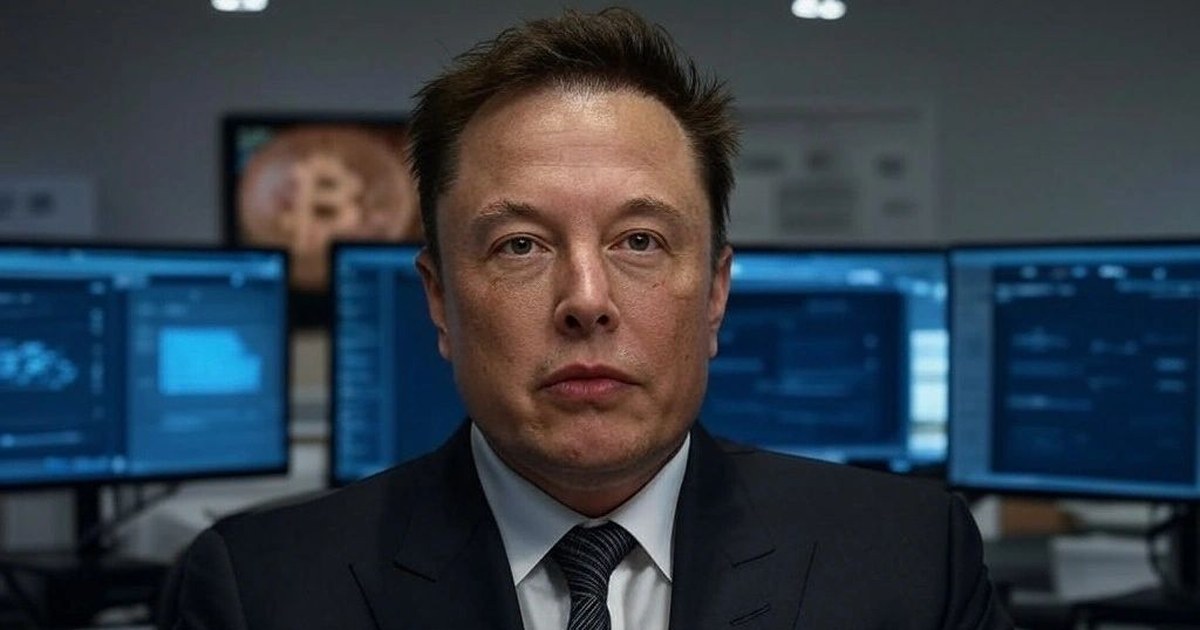
In a recent podcast appearance with Senator Ted Cruz, Elon Musk, the head of the Department of Government Efficiency (DOGE), dropped a provocative claim: his team had uncovered 14 “magic money computers” within various U.S. federal departments. According to Musk, these systems possess what he describes as “blank-check authority,” capable of generating and distributing funds seemingly out of thin air. Departments like the Treasury, Health and Human Services, State, and Defense were cited as housing these mysterious machines. While Musk’s phrasing is colorful, his revelation has reignited debates about government spending, monetary policy, and the role of decentralized alternatives like Bitcoin in addressing systemic economic flaws.Unpacking the "Magic Money Computers"Musk’s “magic money computers” appear to be a hyperbolic way of describing government systems with the ability to authorize payments without rigorous oversight or transparent accounting. He suggested that these systems, while not entirely inaccurate in their reporting, could be off by as much as 5% to 10%—a margin that, given the scale of federal budgets, translates to billions of dollars. Musk pointed to inefficiencies, such as agencies holding more software subscriptions than employees or funds being sent to unintended recipients with no follow-up, as evidence of waste and incompetence rather than outright fraud.
This isn’t a new critique. Economists and fiscal watchdogs have long highlighted how government spending can lack accountability, especially in sprawling bureaucracies. What Musk’s comments underscore, however, is the perception that fiat currency—the U.S. dollar, in this case—can be conjured at will, diluting its value and eroding public trust. His DOGE initiative, tasked with slashing federal spending, frames these “computers” as symbols of a deeper problem: a monetary system unbound by hard limits. Implications for the Current Economic System The idea that money can be created “out of nothing” isn’t fiction—it’s a feature of modern fiat systems. Central banks like the Federal Reserve can expand the money supply through mechanisms like quantitative easing or by adjusting interest rates, while government spending often relies on deficit financing.
This flexibility has benefits, such as stimulating economies during crises, but it also carries risks: inflation, currency devaluation, and a growing national debt that future generations must shoulder. Musk’s revelation—if accurate—suggests a lack of discipline even within this already loose framework.
If federal agencies can issue payments with little scrutiny, it amplifies concerns about transparency and accountability. Inflation, already a pressing issue in 2025, could worsen if unchecked spending continues to flood the system with dollars. For everyday citizens, this translates to a hidden tax: as the dollar’s purchasing power shrinks, savings lose value, and the cost of living climbs.Critics might argue that Musk’s “magic money computers” are simply tools of Modern Monetary Theory (MMT), which posits that governments issuing their own currency can spend freely without worrying about deficits, as long as inflation is managed. Yet, the reality of rising prices and public skepticism suggests that this theory’s limits are being tested. The disconnect between money creation and tangible economic output fuels a growing distrust in centralized financial systems—a distrust that has propelled interest in alternatives like Bitcoin. Bitcoin as a Solution Bitcoin, often dubbed “digital gold,” offers a stark contrast to the fiat system Musk critiques. Launched in 2009 by the pseudonymous Satoshi Nakamoto, Bitcoin operates on a decentralized blockchain—a transparent, immutable ledger maintained by a global network of computers. Unlike the dollar, Bitcoin’s supply is capped at 21 million coins, a limit hardcoded into its protocol. No central authority can print more, making it immune to the kind of “thin air” money creation Musk describes. If the U.S. government’s “magic money computers” were replaced or supplemented by a Bitcoin-based system, several transformative shifts could occur:
- Transparency and Accountability: Every Bitcoin transaction is recorded on the blockchain, visible to all and verifiable by anyone. Unauthorized or wasteful spending would be far harder to conceal, as funds couldn’t be issued without network consensus.
- Elimination of Inflationary Pressure: With a fixed supply, Bitcoin can’t be inflated away by overzealous spending. This scarcity could stabilize its value over time, offering a hedge against the dollar’s erosion—something Bitcoin advocates have long championed.
- Decentralized Control: By removing the power to create money from a handful of government computers, Bitcoin redistributes financial sovereignty to individuals. No single entity could manipulate the system, reducing the risk of mismanagement or abuse.
Bitcoin proponents, including voices on platforms like X, see Musk’s comments as a rallying cry. They argue that a system where money is auditable and finite “fixes” the flaws of fiat currency, aligning with Musk’s apparent disdain for unchecked spending. For instance, the cryptocurrency’s design prevents double-spending and ensures every coin’s origin is traceable—features that could theoretically prevent the kind of sloppy accounting Musk alleges.
Challenges and Caveats Bitcoin isn’t a panacea. Its volatility, while lessening as adoption grows, remains a hurdle for widespread use as a stable currency. Transaction speeds and fees, though improved by innovations like the Lightning Network, still lag behind traditional payment systems for everyday use.
Moreover, transitioning a global superpower like the U.S. to a Bitcoin standard would face immense logistical and political resistance. Governments rely on fiat’s flexibility to fund programs and respond to crises—Bitcoin’s rigidity could limit that agility.Skeptics also question whether Musk’s “magic money computers” are as unchecked as he implies. Federal spending, while imperfect, operates within a framework of congressional budgets and audits. Exaggeration might be a tactic to spotlight inefficiency rather than evidence of a literal free-for-all. Still, the broader point resonates: a system that appears to create wealth without constraint invites scrutiny.
The Bigger PictureMusk’s critique, paired with Bitcoin’s rise, reflects a growing tension between centralized authority and decentralized innovation. As of March 18, 2025, with inflation concerns lingering and public debt soaring, the appetite for alternatives is palpable. Bitcoin’s appeal lies not just in its scarcity but in its promise of a rules-based system—one where “magic” doesn’t dictate value.
Whether Bitcoin becomes the world’s reserve currency, as some enthusiasts hope, or merely a complementary asset, its existence challenges the status quo. Musk’s “14 magic money computers” may be a catchy soundbite, but they symbolize a real debate: who controls money, and how should it be managed? For now, Bitcoin offers a compelling answer—one that’s gaining traction with every dollar printed “out of thin air.”