
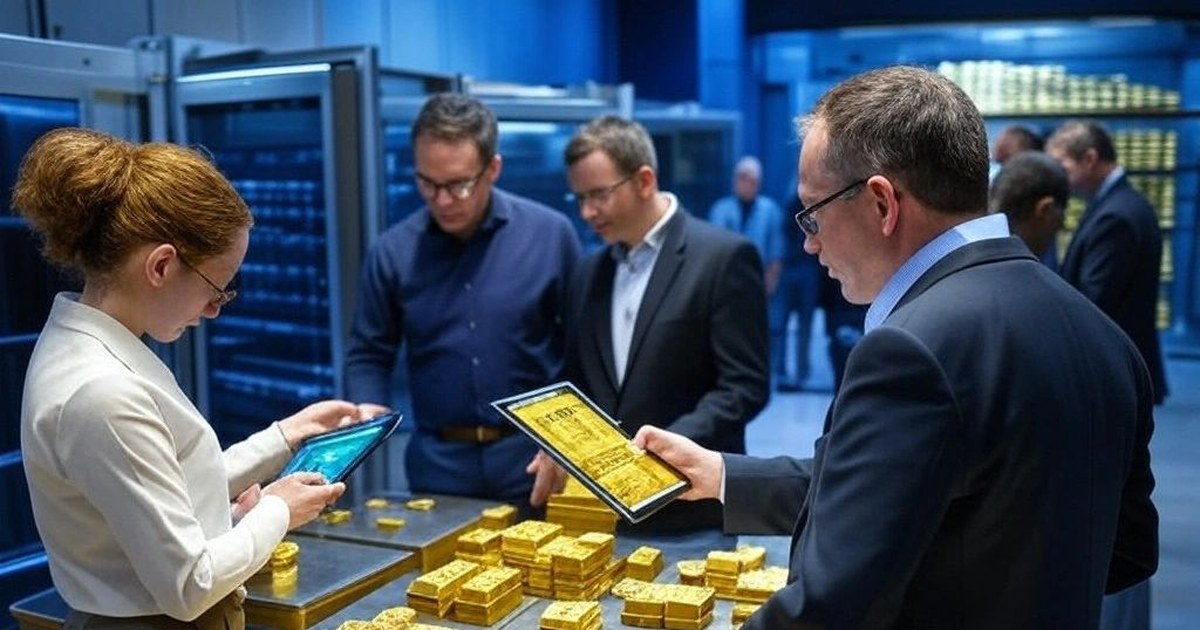
In a surprising twist that has captured the attention of both traditional financial markets and cryptocurrency enthusiasts, Elon Musk's Department of Government Efficiency (DOGE) is reportedly considering an audit of the gold reserves held at Fort Knox. This development follows a call by U.S. Senator Rand Paul for greater transparency regarding the U.S. gold stash, last comprehensively audited decades ago.
The Background of Fort Knox AuditsFort Knox, known officially as the United States Bullion Depository, is famed for storing a significant portion of the U.S. gold reserves, estimated at around 4,580 tons or roughly $425 billion at current market rates. The last full audit of these reserves was conducted in 1953. Since then, there have been partial audits, with the most notable being in 1974 when journalists and members of Congress were allowed into the vaults following claims of missing gold. However, no comprehensive audit has occurred in the intervening 71 years, leading to a plethora of conspiracy theories and questions about the actual gold content.
DOGE's InvolvementElon Musk, through his newly established DOGE task force aimed at government efficiency, has been vocal about transparency in government operations. After Senator Paul's invitation, Musk engaged on social media, questioning the frequency of audits and suggesting a potential review. This has fueled discussions on platforms like X, where users speculate on what an audit might reveal.
Potential Impact on Gold and Bitcoin Prices
- Gold Prices:
- If Gold is Missing or Less Than Stated: A discrepancy in the gold reserves could lead to a significant loss of trust in the U.S. dollar's backing, traditionally seen as tied to gold reserves. Such a revelation might trigger a sell-off in gold, initially dropping its price due to shaken confidence. However, if investors begin to doubt the integrity of gold as a safe-haven asset, this could also paradoxically increase its value as a tangible asset in times of uncertainty.
- If Gold Matches Records: Confirmation that the gold reserves are as stated could actually bolster gold prices by reaffirming its role as a secure asset. However, the market might react with a "buy the rumor, sell the news" strategy, potentially leading to a short-term dip followed by stabilization or growth.
- Bitcoin Prices:
- Increased Bitcoin Adoption: Bitcoin advocates argue that the cryptocurrency's transparent and auditable nature via blockchain technology could make it an attractive alternative to gold. If an audit uncovers issues with the gold reserves, Bitcoin, often referred to as "digital gold," might see increased adoption, driving its price up as investors look for alternatives to traditional assets.
- Speculative Surge: Speculation around the audit has already begun to influence Bitcoin prices, with some analysts predicting a potential surge if the audit leads to widespread distrust in gold. Discussions on platforms like X suggest Bitcoin could reach new highs, with some optimistic forecasts eyeing beyond $500,000 if the audit results are negative for gold.
Market Sentiments and Predictions
Posts on X and related web content have expressed a range of sentiments, from skepticism about the actual presence of gold to enthusiasm for what this could mean for Bitcoin. There's a growing narrative that Bitcoin's verifiability could lead to a new era of trust in digital assets over physical ones. However, these predictions remain speculative, and the actual market reaction would depend heavily on the audit's findings and broader economic conditions.
Conclusion
The prospect of DOGE auditing Fort Knox has ignited debates on financial transparency, the role of gold in modern economies, and the potential ascension of Bitcoin as a primary store of value. While the actual outcomes are uncertain, the mere discussion has begun to influence market sentiments, creating a scenario where both gold and Bitcoin could experience significant volatility. As the world watches this unusual intersection of meme culture, government oversight, and financial markets, the implications could reshape perceptions of value and trust in both traditional and digital assets.