
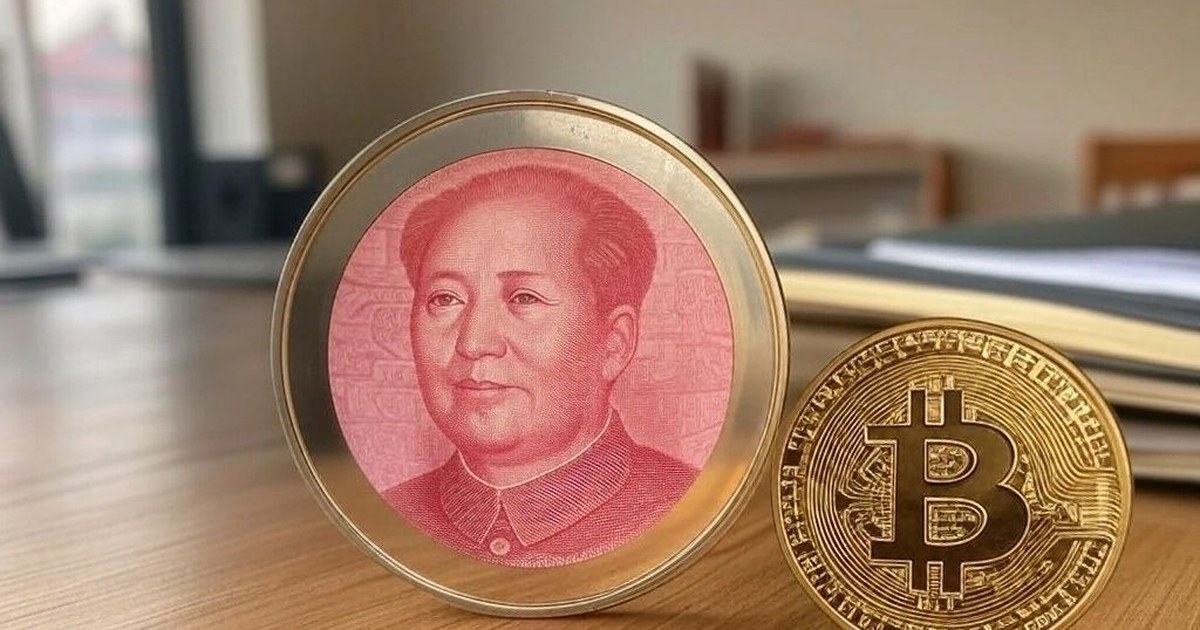
As of March 25, 2025, the global financial landscape is abuzz with speculation about China’s next economic moves. Reports suggest that the world’s second-largest economy may be gearing up to inject trillions of dollars into global liquidity, a strategy that could reshape markets and accelerate the adoption of digital currencies—potentially including Bitcoin. While China has historically taken a cautious stance on decentralized cryptocurrencies, recent rumors and actions hint at a possible shift, raising eyebrows among investors, analysts, and crypto enthusiasts alike.
A $1.4 Trillion Economic Stimulus Package
In November 2024, China unveiled a staggering $1.4 trillion debt package aimed at easing local government financing pressures and stabilizing an economy facing headwinds from slowing growth and external pressures, including the re-election of U.S. President Donald Trump. This move, reported by Forbes, is seen as a signal of China’s intent to flood its financial system with liquidity. Historically, such stimulus measures have had a ripple effect beyond China’s borders, pushing capital into risk assets like stocks, commodities, and even cryptocurrencies.
Analysts note that when China ramps up monetary stimulus—as it did in 2015 and 2020—excess liquidity often finds its way into alternative investments. Bitcoin, with its reputation as a “digital gold” and hedge against inflation, has previously benefited from such conditions. The current package, designed to counter economic stagnation and bolster confidence, could set the stage for a similar surge in crypto markets, especially if paired with a softening stance on digital currencies.
Rumors of China Embracing Bitcoin
China’s relationship with Bitcoin has been tumultuous. Since banning crypto transactions in 2021, the country has prioritized its state-backed digital yuan, a centralized digital currency under the control of the People’s Bank of China (PBoC). However, unconfirmed rumors circulating in early 2025 suggest that China might be quietly accumulating Bitcoin positions. Posts on X, including claims from prominent figures like Max Keiser, assert that China is actively buying Bitcoin, potentially as part of a broader strategy to diversify its reserves and hedge against global economic uncertainty.
While no official confirmation has emerged from Beijing, the speculation is fueled by China’s reported holdings of approximately 194,000 Bitcoin, seized from Ponzi schemes and valued at over $16 billion as of March 4, 2025, according to Al Jazeera. If true, this accumulation could signal a pragmatic pivot: rather than outright rejecting decentralized cryptocurrencies, China might be positioning itself to leverage Bitcoin’s growing global influence, especially as the U.S. moves to establish its own strategic Bitcoin reserve under President Trump.
Adding to the intrigue, some X posts claim China is collaborating with Russia to develop a gold-backed stablecoin. Russia’s reported use of Bitcoin, Ether, and stablecoins like Tether in oil trades with China and India—detailed by Reuters on March 14, 2025—lends credence to the idea that both nations are exploring crypto as a tool to bypass Western sanctions and reduce reliance on the U.S. dollar. If China were to formally integrate Bitcoin or a crypto-based asset into its financial toolkit, it could trigger a wave of institutional “fear of missing out” (FOMO), driving prices higher.
The Digital Yuan and a Dual-Track Approach
China’s primary digital currency focus remains the digital yuan, which has been in development for years and is designed to enhance state control over monetary flows. Unlike Bitcoin, the digital yuan is centralized, trackable, and tied to the PBoC’s monetary policy. Yet, the rumored embrace of Bitcoin suggests a possible dual-track strategy: promoting the digital yuan domestically while quietly engaging with decentralized cryptocurrencies to compete in the global arena.
This approach could align with China’s broader economic goals. The $1.4 trillion stimulus, combined with potential crypto adoption, might amplify global liquidity, making risk assets like Bitcoin more attractive. As Forbes noted on March 7, 2025, China’s past liquidity injections have historically boosted Bitcoin’s price, and the current environment—marked by Trump’s pro-crypto policies and a weakening dollar dominance—could amplify this effect.
Implications for Global Markets
If China indeed adds trillions to global liquidity while softening its stance on Bitcoin, the implications could be profound. First, an influx of capital could reignite bullish sentiment in crypto markets, which have seen volatility in early 2025 following a post-election rally and subsequent pullback. Bitcoin, trading below $80,000 after erasing $1 trillion in market value since its peak, per Forbes on March 16, 2025, might find a new catalyst for growth.
Second, China’s move could accelerate a global race to integrate digital currencies into national reserves. The U.S. has already taken steps with Trump’s executive order on March 7, 2025, to establish a strategic Bitcoin reserve using existing holdings, as reported by Reuters. If China follows suit, other nations might feel pressured to join, further legitimizing cryptocurrencies as a reserve asset class.
Finally, this shift could challenge the U.S. dollar’s dominance. A South China Morning Post article from March 11, 2025, posed the question: Has China missed the crypto boat while the U.S. dives in? The answer may be no if these rumors prove true. By blending its digital yuan with selective crypto adoption, China could position itself as a leader in the next phase of global finance.
Skepticism and Uncertainty
Despite the excitement, skepticism remains. China’s government has not publicly endorsed Bitcoin, and its ban on crypto transactions still stands. The rumors, largely driven by social media and unverified sources, lack concrete evidence from official channels. Moreover, China’s tight control over capital flows and its focus on the digital yuan suggest that any embrace of Bitcoin would be strategic and limited, rather than a full-scale reversal of policy.
Conclusion
China’s potential to add trillions to global liquidity through its $1.4 trillion debt package is a bold economic play that could reverberate worldwide. The accompanying rumors of Bitcoin accumulation and collaboration with Russia on a gold-backed stablecoin add a tantalizing twist, hinting at a possible thaw in China’s crypto stance. While the full picture remains unclear, one thing is certain: if China does embrace digital currencies like Bitcoin, even partially, it could ignite a new era of global financial competition and crypto adoption. For now, the world watches—and waits—for confirmation from Beijing.