
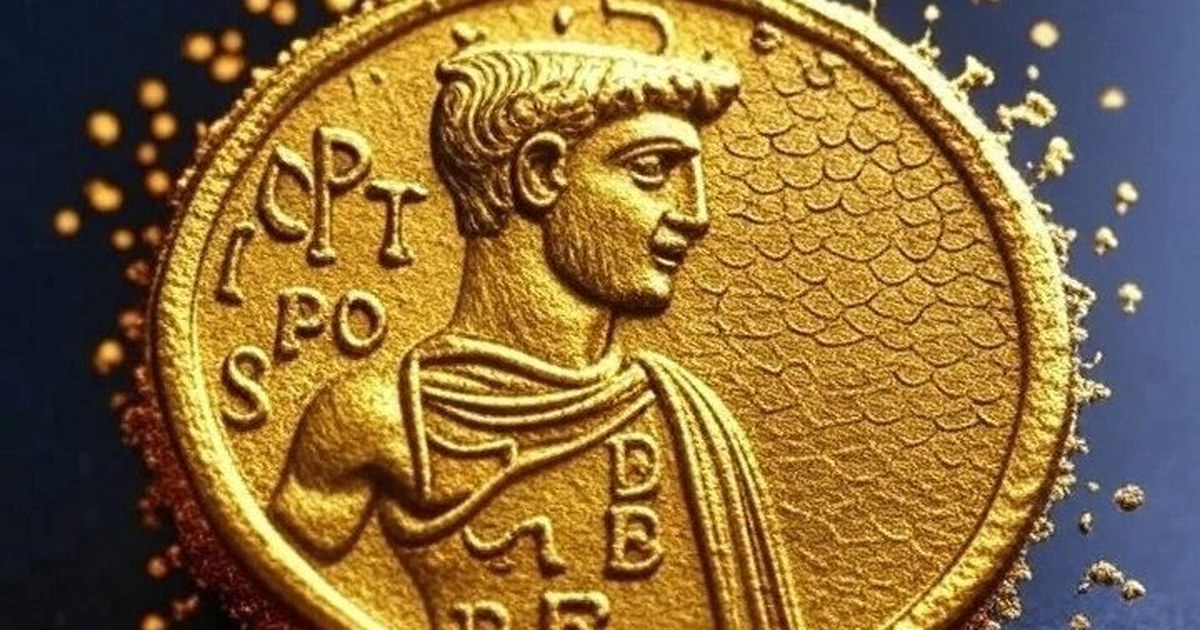
For years, Bitcoin has been hailed as "digital gold," a decentralized store of value poised to rival the precious metal in an increasingly digital world. While the comparison highlights Bitcoin’s scarcity and appeal as an inflation hedge, it overlooks a more fitting historical parallel: the Byzantine solidus. This ancient gold coin, which underpinned a thousand years of economic stability in the Eastern Roman Empire, offers a richer analogy for Bitcoin’s role in the modern financial landscape. Far from being a passive store of value like gold, Bitcoin mirrors the solidus as a robust, trust-based medium of exchange that fosters global trade, economic resilience, and monetary sovereignty—albeit in a digital form.
The Solidus: A Historical Benchmark Introduced by Emperor Constantine in 312 CE, the solidus was a gold coin of exceptional purity and consistency, weighing 4.5 grams and often exceeding 95% gold content. For nearly a millennium, it served as the backbone of the Byzantine economy, facilitating trade across three continents and earning universal trust among merchants, states, and citizens. The solidus wasn’t just a store of value; it was a reliable medium of exchange that supported a sophisticated economy, funded imperial ambitions, and became the international standard for commerce. Its stability enabled the Byzantine Empire to thrive through invasions, plagues, and political upheavals, until its debasement in the 11th century precipitated economic decline. Bitcoin, launched in 2009 by the pseudonymous Satoshi Nakamoto, shares striking parallels with the solidus. Like its ancient predecessor, Bitcoin is a decentralized currency with a fixed supply—capped at 21 million coins—ensuring scarcity and resistance to inflationary tampering. Its blockchain, a transparent and immutable ledger, mirrors the solidus’s consistent purity by providing a verifiable, trustless system that eliminates the need for intermediaries. But Bitcoin’s true resemblance to the solidus lies in its potential to serve as a global medium of exchange, fostering economic activity in a borderless digital realm.
Bitcoin as a Medium of Exchange, Not Just a Store of Value The "digital gold" narrative emphasizes Bitcoin’s role as a hedge against inflation and a safe haven during economic uncertainty. Gold, however, is primarily a passive asset—hoarded rather than spent, with limited utility in daily transactions. The solidus, by contrast, was a workhorse currency, circulating widely in Byzantine markets and across international trade routes. It was the preferred coin for merchants in Persia, India, and Western Europe, underpinning commerce in a way gold never did. Bitcoin is increasingly following this path. While early adopters viewed it as a speculative asset, its use as a medium of exchange has grown steadily. By May 2025, Bitcoin is accepted by thousands of merchants worldwide, from tech companies like Microsoft to small businesses in El Salvador, where it has been legal tender since 2021. The Lightning Network, a second-layer scaling solution, enables fast, low-cost transactions, making Bitcoin practical for everyday use—much like the solidus was for Byzantine citizens buying goods in Constantinople’s markets. Moreover, Bitcoin’s borderless nature echoes the solidus’s role as an international standard. In the 7th century, Arab traders and European kings relied on the solidus for trade; today, Bitcoin facilitates cross-border payments without the friction of traditional banking systems. Remittances, a lifeline for many developing economies, are increasingly settled in Bitcoin, bypassing high fees and currency controls. For example, platforms like Strike allow users in the Philippines to receive Bitcoin remittances instantly, converting them to local currency if needed. This global utility positions Bitcoin as a modern solidus, not merely a digital hoard.
Resilience Through Decentralization The solidus owed its longevity to the Byzantine Empire’s centralized control over minting, ensuring its purity and weight remained consistent for centuries. Bitcoin achieves a similar resilience through decentralization. Its proof-of-work consensus mechanism, secured by a global network of miners, prevents tampering and ensures that no single entity can debase the currency—a fate the solidus suffered when emperors reduced its gold content to fund deficits. This decentralization makes Bitcoin a bulwark against modern monetary failures, much as the solidus was during the Byzantine era. In countries like Venezuela and Lebanon, where hyperinflation has eroded trust in fiat currencies, Bitcoin has emerged as a lifeline. Citizens use it to preserve wealth and transact without relying on failing banking systems, mirroring how Byzantine citizens trusted the solidus during times of crisis. By May 2025, reports indicate that Bitcoin adoption in such regions has surged, with peer-to-peer trading volumes on platforms like LocalBitcoins reaching all-time highs.
Challenges: The Risk of “Digital Debasement” The solidus’s decline offers a cautionary tale for Bitcoin. Starting in the 10th century, Byzantine emperors debased the coin by reducing its gold content, triggering inflation and eroding trust. Bitcoin’s fixed supply prevents literal debasement, but it faces its own risks: scaling issues, regulatory crackdowns, and competition from other cryptocurrencies. If transaction fees on the Bitcoin network rise too high or if governments impose stifling regulations—as some, like China, have attempted—its utility as a medium of exchange could falter, undermining its solidus-like potential. Additionally, Bitcoin’s volatility, while decreasing over time, remains a hurdle. The solidus was prized for its stability; Bitcoin, despite maturing as a market, still experiences significant price swings. For example, in early 2025, Bitcoin’s price fluctuated between $50,000 and $70,000, driven by macroeconomic factors like U.S. Federal Reserve rate hikes. Stablecoins like USDT have filled the gap for many seeking a more predictable digital currency, but Bitcoin’s long-term adoption as a global standard hinges on achieving greater price stability through broader acceptance and market depth.
A Modern Digital Solidus for a Digital Age Bitcoin’s trajectory suggests it is more than a speculative asset or "digital gold." Like the solidus, it is a currency designed for use, not just hoarding—a tool for economic empowerment in a world where traditional financial systems often exclude the unbanked or oppress the vulnerable. Its decentralized nature, fixed supply, and growing utility as a medium of exchange make it a modern counterpart to the Byzantine coin that once dominated global trade. The solidus thrived for a thousand years because it inspired trust and facilitated commerce across a fractured world. Bitcoin, now 16 years old as of 2025, is still in its infancy but shows similar promise. If it can overcome its challenges and continue to scale as a global currency, Bitcoin may well become the digital solidus of the 21st century—a currency that not only stores value but reshapes the economic order, just as its ancient predecessor did centuries ago.